Sinergy Cycle Tracker 2026
Sinergy Cycle Tracker 2026
Couldn't load pickup availability
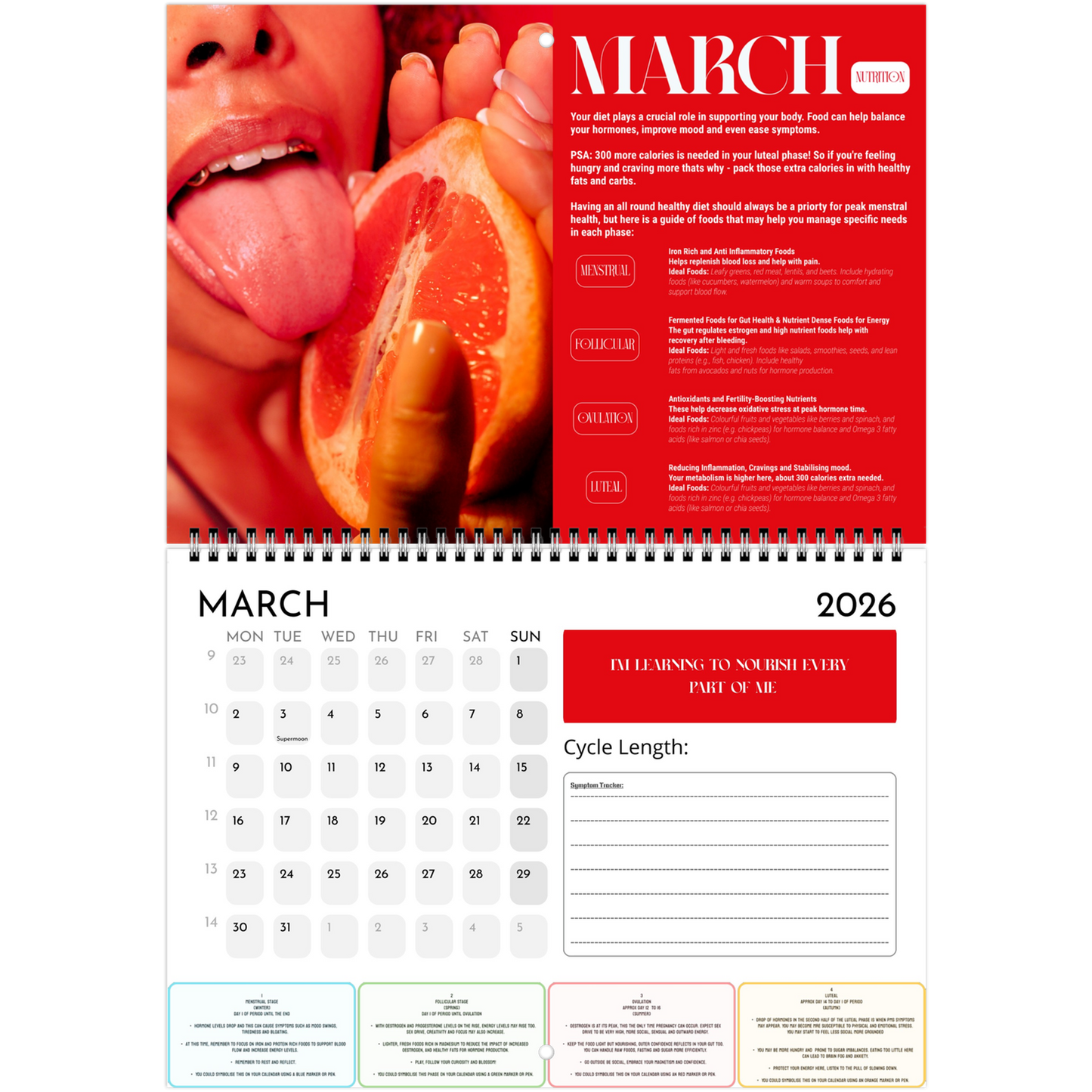
Introducing Sinergy's 2026 Wall Calendar, thoughtfully designed to help women connect with their bodies and embrace their natural rhythms. More than just a calendar, it’s a wellness tool that guides you through your menstrual cycle, offering insightful tips on hormonal balance, holistic self-care, and personal empowerment.
With monthly affirmations, gentle reminders for self-care, and space to track your cycle, this calendar is an empowering resource that encourages reflection and self-awareness.
Our mission at Sinergy is to help women understand their bodies and cycles, empowering them to thrive in all aspects of life.
Let this be the year you truly honour your body and step into your power.
Disclaimer: This calendar is intended as a wellness guide and is not a substitute for professional medical advice, diagnosis, or treatment. Always consult with your healthcare provider before making any changes to your health routine or if you have any concerns about your menstrual cycle or overall well-being.
Original Artwork by Yousra - @inked.by.you
Original Photography by Tatenda - @thancs777
Model - Èma Marià
Features:.
- High-Quality Printing: Printed in vibrant, full-color on 250gsm coated silk paper (100 lb cover) with professional packaging for a flawless delivery.
- Eco-Friendly: Made with FSC/PESC-certified papers and local production to minimize our environmental impact.
FAQ:
1. Why is my period blood brown or a different color?
Period blood can appear brown when it’s older blood leaving the uterus more slowly. Tracking blood color on your calendar helps you notice patterns over time and distinguish normal cycle changes from shifts that may need attention.
2. What is PMS and why does it affect my energy?
PMS (Premenstrual Syndrome) includes physical and emotional symptoms caused by hormonal changes before your period. Tracking PMS symptoms on your calendar helps you anticipate low-energy days and plan rest, nutrition, and lighter workloads in advance.
3. What is a normal menstrual cycle length?
A typical cycle lasts between 21 and 35 days, but normal varies from person to person. Using a calendar to track your cycle helps you identify what’s normal for your body instead of comparing yourself to averages.
4. Why is my period late?
Late periods are commonly caused by stress, hormonal shifts, travel, or lifestyle changes. Tracking your cycle on a calendar makes it easier to spot delays early and understand what factors may be affecting your timing.
5. Why do I have period pain or cramps?
Cramps are caused by uterine contractions triggered by hormones. Logging pain levels on your calendar helps you recognize recurring patterns and prepare supportive habits before pain peaks.
6. Can you get pregnant during your period?
Pregnancy during your period is unlikely but possible, especially with shorter cycles. Tracking your cycle on a calendar helps you understand ovulation timing and fertility windows more clearly.
7. Why is my period heavy or unusually light?
Changes in flow can be influenced by hormones, stress, or health conditions. Tracking flow levels on your calendar creates a clear record, helping you recognize what’s typical for you and when something has changed.
5. Why do I have period pain or cramps?
Cramps are caused by uterine contractions triggered by hormones. Logging pain levels on your calendar helps you recognize recurring patterns and prepare supportive habits before pain peaks.
6. Can you get pregnant during your period?
Pregnancy during your period is unlikely but possible, especially with shorter cycles. Tracking your cycle on a calendar helps you understand ovulation timing and fertility windows more clearly.
7. Why is my period heavy or unusually light?
Changes in flow can be influenced by hormones, stress, or health conditions. Tracking flow levels on your calendar creates a clear record, helping you recognize what’s typical for you and when something has changed.
8. Why do I have spotting before or after my period?
Spotting can happen due to hormonal fluctuations or cycle shifts. Tracking spotting on your calendar helps you see whether it’s occasional or recurring, which is useful for understanding cycle health.
9. Why is my period late but I still have cramps?
Cramps without bleeding can occur when hormones fluctuate but menstruation is delayed. Tracking symptoms on your calendar helps connect physical sensations with cycle timing rather than causing confusion or worry.
10. How does tracking my period on a calendar help my energy and well-being?
Tracking your cycle on a calendar helps you plan life around your natural energy rhythms. Over time, this awareness improves energy management, reduces burnout, and supports long-term hormonal balance.
Share